
Real estate companies are increasingly choosing all-inclusive serviced offices as a flexible and efficient workspace solution that perfectly aligns with the fast-paced and ever-changing nature of the property industry. Unlike many traditional businesses, real estate professionals spend most of their working hours outside the office, attending property viewings, meeting clients, and negotiating transactions. As a result, they do not require large, fixed office spaces or long-term lease commitments. Instead, serviced offices provide a professional base that supports mobility, adaptability, and operational efficiency without unnecessary complexity.
One of the primary reasons real estate firms opt for serviced offices is the flexibility they offer. Short-term lease agreements allow businesses to respond quickly to market fluctuations, seasonal demand, and changes in team size. Office space can be easily scaled up or down, making serviced offices an ideal solution in a highly competitive and dynamic market. This flexibility is particularly important in real estate, where performance is closely linked to economic conditions, buyer confidence, and market activity.
All-inclusive serviced offices also eliminate the need for significant upfront investments in office fit-outs, furniture, and infrastructure. Essential services such as utilities, high-speed internet, cleaning, maintenance, and reception support are included in a single, transparent monthly fee. This structure simplifies cost management and allows real estate companies to allocate resources toward growth, marketing, and expanding their property portfolios rather than managing office operations.
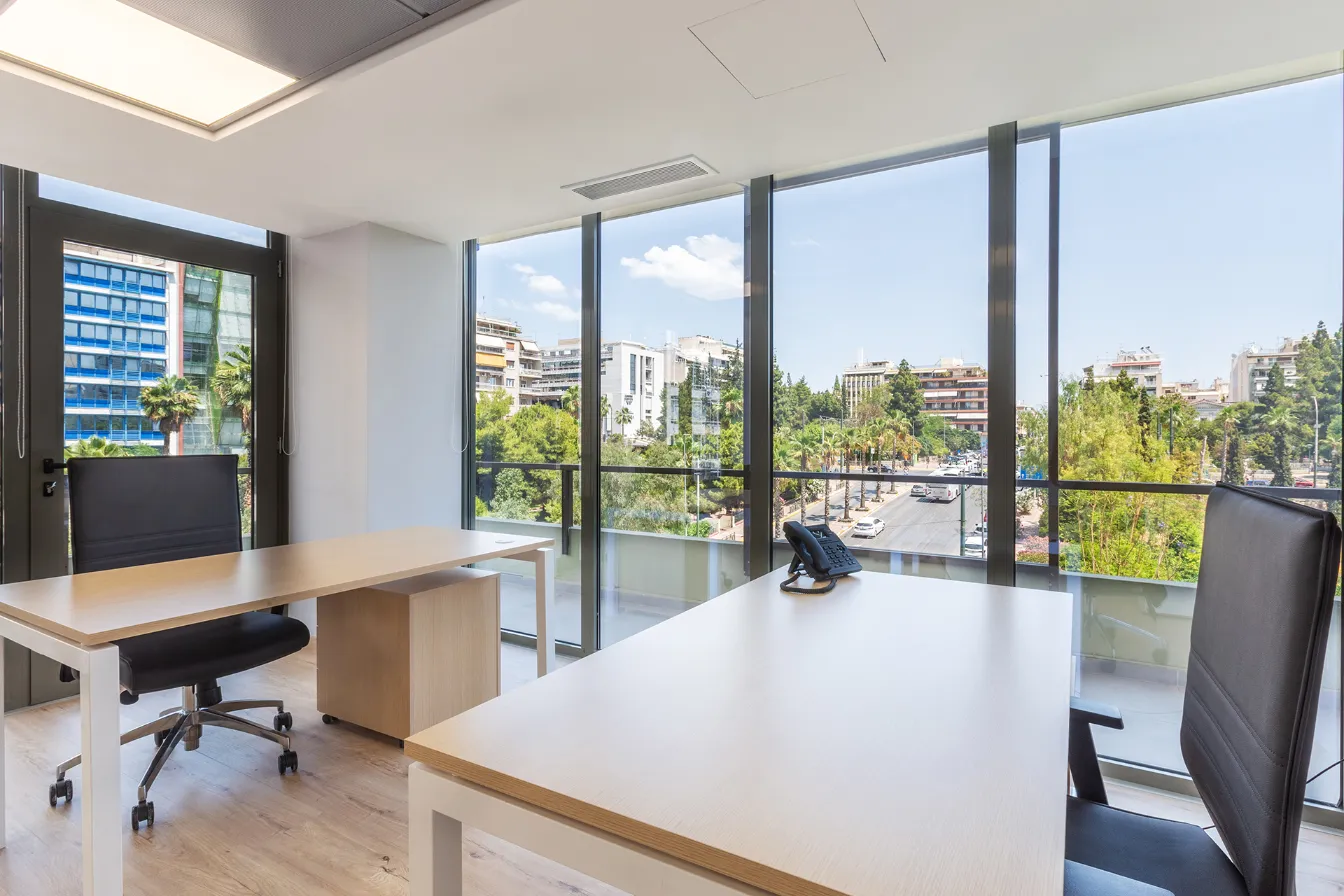
Time efficiency is another critical factor. Serviced offices are fully managed environments, requiring minimal involvement in daily administration. There is no need to coordinate with multiple service providers or oversee maintenance issues. This allows real estate professionals to focus on what matters most: building strong client relationships, closing deals, and driving revenue.
What truly distinguishes real estate companies from other industries when selecting all-inclusive serviced offices is their need for a strong professional image without long-term operational commitment. Unlike businesses that rely on full-time, desk-based teams, real estate firms operate in a highly mobile, client-facing environment. Their office is not a space for daily attendance, but a strategic hub that enhances credibility, supports client meetings, and reinforces brand presence.
Specifically, real estate companies require a prestigious business address to inspire trust, on-demand meeting rooms for client consultations and contract signings, and flexible workspaces that support movement rather than permanent occupancy. All-inclusive serviced offices meet these needs by offering a high-quality business environment without restrictions on traditional leases.
Meeting clients in a modern, well-located serviced office creates a positive and lasting impression. Professional reception services, fully equipped meeting rooms, and premium shared spaces strengthen brand image and build confidence—an essential factor in high-value property transactions. Additionally, serviced offices provide a low-risk way for real estate companies to enter new markets or establish satellite offices, allowing them to grow strategically without long-term financial exposure.